
Making the Promise Real: How a UN Tax Convention Can Fulfill the UNDHR’s Vision
 Nelson Camilo Sánchez joined the University of Virginia School of Law faculty in 2018 as Director of the International Human Rights Law Clinic. He has worked as a consultant and legal expert on different human rights issues for academic, intergovernmental, and nongovernmental organizations.
Seventy-seven years after the promulgation of the Universal Declaration of Human Rights (UNDHR), the world has made significant strides toward realizing its ideals. Despite this progress, much work remains to be done to fully achieve these universal rights. Countries often cite a lack of resources as the main reason they cannot fully realize the UNDHR’s promise. This is where tax policies become crucial. Annually, governments lose an astounding $480 billion to global tax abuse—a figure that signifies more than just a financial loss. This shortfall directly undermines public services, particularly in lower-income countries, where it accounts for nearly half of their public health budgets. The impact is tangible: hospitals remain unbuilt, clinics unstaffed, and human potential unrealized due to these forfeited funds.

The Birth of a Global Tax Reform Movement
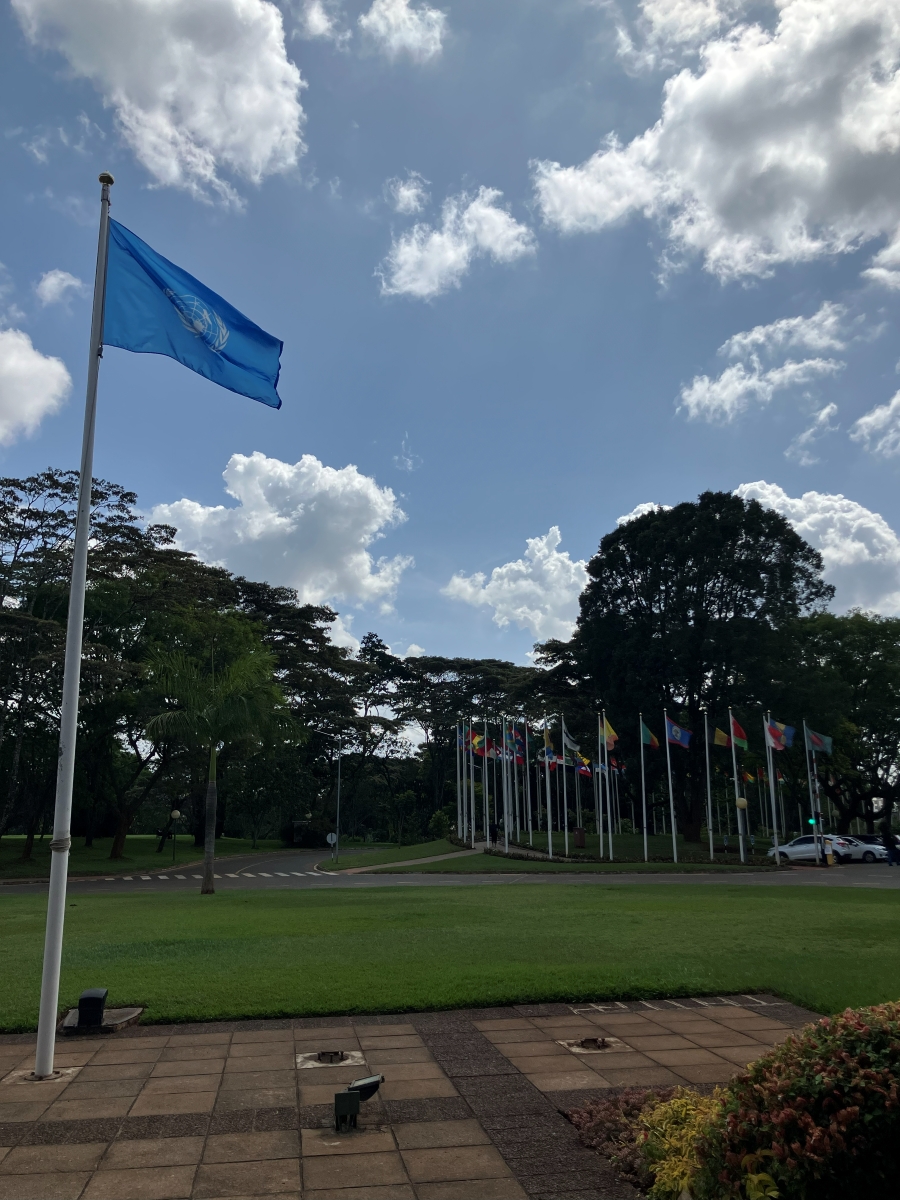
For decades, the Organization for Economic Co-operation and Development (OECD) has dominated international tax rule-setting, intended as the watchdog but failing to stop the rise of corporate tax abuse. As a response, developing countries and civil society activists have advocated for the United Nations to become the forum for tax reform discussions. This shift marks the first time global tax rules are negotiated in an open, democratic setting where every country has a voice.

The push for the United Nations Framework Convention on International Tax Cooperation (UNFCITC) has been led by African countries. It represents over two decades of demand for change by Global South countries (often part of the G77 group), consistently thwarted by OECD influence. Consequently, these negotiations are a geopolitical struggle and pose a significant challenge to the century-long dominance of former imperial powers in shaping global economic rules.
Demanding a New Tax Framework
The UN negotiations propose a radical overhaul rather than merely tweaking existing rules. For a century, the international tax system has been built on the “arm’s length principle,” established by the League of Nations in the 1920s. This principle is based on a core fiction: that multinational subsidiaries are independent entities that transact “at arm’s length.” This legal loophole enables corporations to shift profits to tax havens.
The UN negotiations are advancing an alternative: Unitary Taxation with Formulary Apportionment. Although a mouthful, the concept is simple:
• Treat a multinational corporation as a single global business.
• Tax its total global profits based on a formula that reflects where actual economic activity occurs—measured by factors like its share of sales and employees in each country.
This change would eliminate the fiction of transfer pricing, rendering it pointless to shift profits to a shell company in a tax haven. It promises fairer taxation and serves as a powerful tool for dispute prevention, replacing the “most expensive fiction in modern history” with a straightforward formula that closes loopholes generating costly legal battles.
Sunlight as a Powerful Tool
A core pillar of the proposed global tax reform isn’t a complex new tax code but a set of simple and effective transparency tools:
• Public Beneficial Ownership Registries: These registries identify the beneficial owners of companies, making it impossible for criminals and tax evaders to hide their assets behind anonymous shell companies.
• Public Country-by-Country Reporting: This practice requires multinational corporations to report profits and taxes paid in every country where they operate. This disclosure exposes profit shifting into tax havens and could prevent 1 out of every 4 dollars lost to such practices today.
These tools won’t just assist tax authorities: they would empower journalists, investors, and civil society to hold corporations and governments accountable, creating a powerful deterrent against abuse and corruption worldwide.
What Lies Ahead
Looking forward, the process involves challenging negotiations over the next two years, alternating between New York and Nairobi. An Intergovernmental Negotiating Committee (INC), comprising all UN member states, is leading this ambitious initiative. By September 2027, the INC intends to present the finalized texts to the UN General Assembly for consideration during its 82nd Session. Once submitted, the framework will require General Assembly approval, after which countries will decide whether to sign and ratify the convention and its protocols independently. A noteworthy aspect of the UNFCITC is the establishment of a framework body that includes a secretariat, regular conferences of the parties, and subsidiary bodies to facilitate ongoing negotiations and address future tax challenges. Hence, significant work lies ahead. However, amidst the current retreat of multilateralism and skepticism about coordinated global solutions, this process stands as a ray of hope for rekindling the spirit of the UNDHR. This is why my students and I, at the UVA Law’s International Human Rights Clinic, will be closely monitoring these developments.
- Making the Promise Real: How a UN Tax Convention Can Fulfill the UNDHR’s Vision
- Having a Drink With Your Donkey: The Absurd in Antiquity
- What Happens to UVA’s Recycling? A Behind the Scenes Look at Recycling, Composting, and Reuse on Grounds
- UVA Club of Atlanta: Virtual Pilates Class
- UVA Club of Fairfield/Westchester: Cavs Care - Food Pantry Donation Drive
- UVA Club of Washington DC: Holiday Trivia Night