
Behold – The Art of Giving a Compliment
 Lili Powell holds a joint appointment as the Julie Logan Sands Associate Professor, Darden School of Business, and Associate Professor, School of Nursing. She is also the Director of the School of Nursing’s Compassionate Care Initiative (CCI), which promotes wellbeing, collaboration, leadership, healthy work and learning environments, and compassionate care. Her teaching and writing explore the intersection of mindfulness, communication, and leadership. Through Darden’s Executive Education and Lifelong Learning, she teaches “Leading Mindfully.”
If the news that World Compliment Day passed on March 1 strikes you with a mild case of fear of missing out (FOMO), don’t worry – now you have time to brush up on the art of giving a compliment and practice it until the holiday rolls around again next year.
While it might sound frivolous – something like Talk Like a Pirate Day – World Compliment Day promotes a serious remedy for a common concern. That is, the feeling of invisibility and disengagement at work, which in recent years has gone by phrases such as “acting your wage,” “corporate coasting,” and “quiet quitting.”
You can thank Hans Poortvliet, a Dutch employee recognition professional, for making World Compliment Day a global THING. In response to workforce malaise and attrition following the 2008 global economic crisis, Poortvliet, began promoting Compliment Day first in the Netherlands,[1] and then elevated it to World Compliment Day through HSMAI Europe, a professional association for the hotel, event, and travel industry.[2]
Poortvliet’s holiday promotes the kind of “inner work” and “outer work”[3] that I teach in a Darden executive education program called Leading Mindfully and that we foster through the School of Nursing’s Compassionate Care Initiative. In Poortvliet’s view, “A sincere and personal compliment costs nothing but has a huge impact on the recipient. . . . Because nothing stimulates more, gives more energy, and increases productivity and commitment faster than sincere appreciation.”[4]
Compare Poortvliet’s observation to your own experience. When you receive a genuine compliment, how does it make you feel? Seen. Heard. Like you matter. As my colleague, Dr. Julie Haizlip has written for this blog, mattering derives from human relationships: “Needing each other isn’t a weakness; it is interdependence, the highest level of maturity.”[5]
If giving a compliment costs so little, yet provides such meaningful benefits, why do would-be compliment givers need reminding and encouragement?
For starters, you cannot give a compliment unless you notice something compliment-worthy first. If you unintentionally forget to see, hear, and recognize others, you would not be alone. So much of any day can be spent in autopilot or mindless overdrive. Sadly, we can be so overwhelmed with our own “chronic too-muchness” as CSC Executive Director Kelly Crace calls it,[6] that it simply does not occur to us to notice others’ contributions, much less pay a compliment in return.
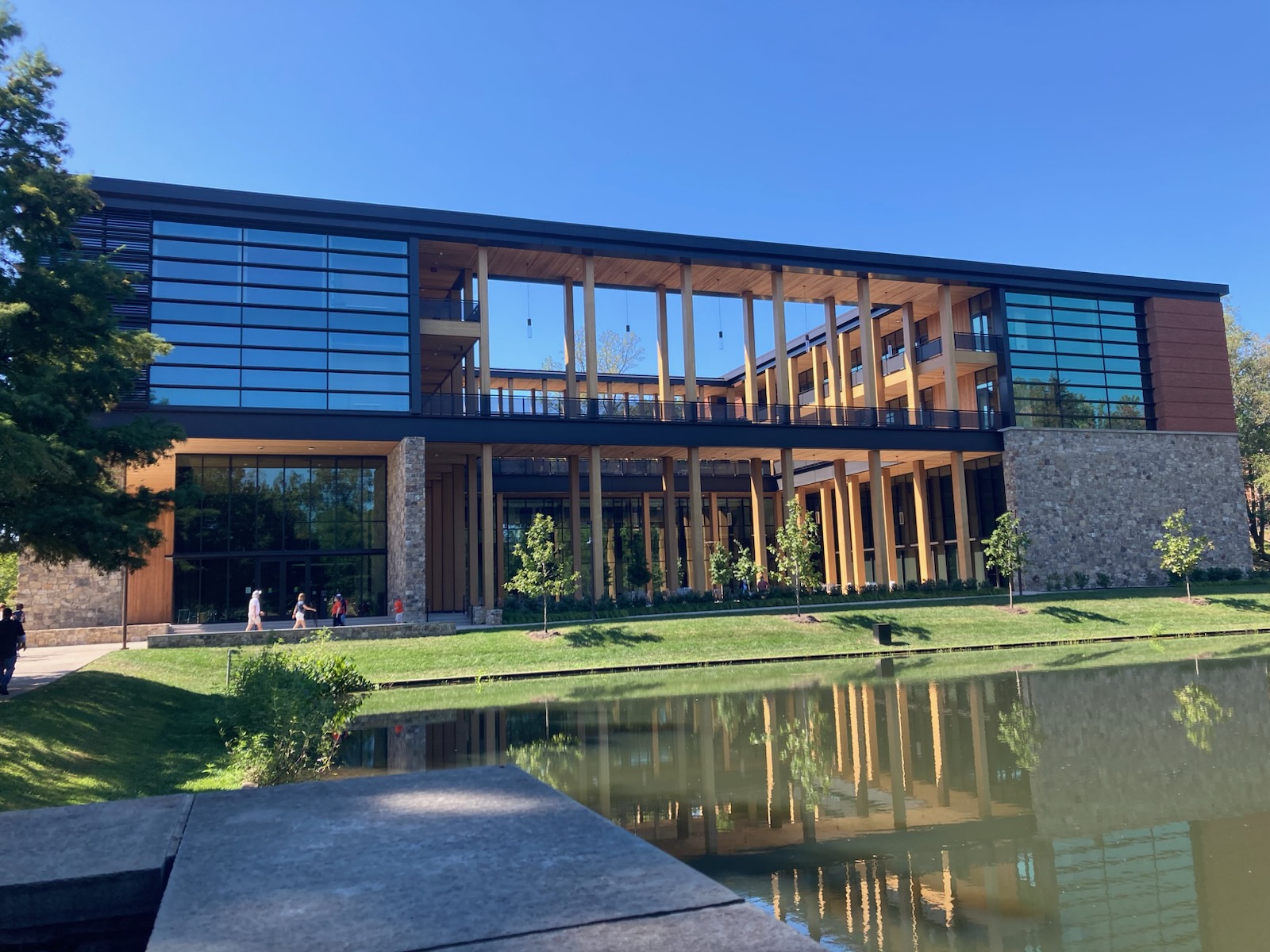
The antidote to our "chronic too-muchness" is the "inner work" of pausing to prime our perceptual pump. Instead of viewing a slow-moving checkout line as a frustrating barrier, we can practice "beholding"—perceiving others with intentional genuine regard and appreciation. By shifting from a mindless, annoyed glare to high-definition awareness, we look past our own impatience to notice the cashier’s patient kindness toward a struggling customer. In that moment of witnessing a small slice of humanity, we face a pivotal choice: keep that warmth as a private thought or flex our "inner and outer work muscles” to offer a sincere compliment.
Curiously, would-be compliment givers work themselves into a tongue-tied knot. In Personality and Social Psychology Bulletin, researchers Erica Boothby and Vanessa Bohns reported the reasons why one might hesitate. They observed that study participants underestimated how positively the person receiving a compliment would feel, and they overestimated how uncomfortable the recipient might feel to hear it. Would-be compliment-givers also worried about their own competence in giving a compliment, but they felt better when they actually gave one.[7]
Technically speaking, giving a compliment starts with the “inner work” of beholding, but then shifts into a rhetorical stance that recognizes the moment that calls out for “outer work” to complete it. A compliment becomes a compliment by speaking it. In the subfield of linguistics known as pragmatics, a compliment is a speech act that involves a “positive evaluation that commonly occur[s] in everyday conversational encounters among interlocutors of equal or higher status.” In English, a compliment is typically directed toward a person’s physical appearance, their possessions, or their capabilities, skills, or achievements. Structurally, a simple compliment sounds like: “I like your eyes,” “I like your Wahoo Cup,” or “You are so good at singing The Good Ol’ Song.”[8]
The very best compliments, especially in a work context, are motivated by catching someone in the act of doing something good, the desire to express gratitude and share a kindness, and the hope that it will truly be heard (and not brushed off) by the recipient. Here are a few genuine compliments that you could make your own:
- Focus on Personal Style or a Work Product: “The slides you designed for our presentation are stunning. Clean, beautiful, persuasive. I really appreciate the personal touch and professional look that you gave to our work.”
- Focus on Skills and Capabilities: “I noticed how you worked with that difficult patient today. Even though they were upset, I was amazed by how you stayed grounded and kind. Those are very special skills that make you a great nurse and colleague.”
- Focus on Effort and Achievement: “I know you pulled out all the stops to get this project done on time. Your work ethic blows me away. Thank you for being so dedicated and making us shine.”
Ultimately, giving a compliment is about more than just being “nice.” It is a recognition of our fundamental interdependence and an effective way to lead mindfully. While it is easy to be too busy to notice, practice the “inner work” of beholding to prime your perceptual pump. And if you are hesitant, remember that the recipient will feel far better than you can imagine. So, in preparation for the next World Compliment Day, build your “outer work” muscles regularly. A few sincere words might be the very thing to help a colleague – or a stranger – feel like they matter.
References
[1] HSMAI Newsdesk, “1 March: Dutch National Compliment Day,” HSMAI Europe (website), December 24, 2017. https://hsmai.eu/2017/12/24/1-march-dutch-national-compliment-day/
[2] HSMAI Newsdesk, “The 1st of March: World Compliment Day,” HSMAI Europe (website), March 1, 2021. https://hsmai.eu/2021/03/01/the-1st-of-march-world-compliment-day-2/
[3] Lili Powell & Jeremy Hunter, “How to Recapture Leadership’s Lost Moment,” Leader to Leader, June 26, 2020, https://doi.org/10.1002/ltl.20519.
[4] Hans Poortvliet, quoted in Ibid.
[5] Julie Haizlip, “Mattering and Interdependence,” Thoughts From the Lawn (blog), March 1, 2024. https://engagement.virginia.edu/learn/thoughts-from-the-lawn/20240301-Haizlip
[6] Kelly Crace, “Intensity to Vitality: Flourishing Through Chronic ‘Too-Muchness,’” (webinar) Contemplative Sciences Center, University of Virginia, August 28, 2025. https://csc.virginia.edu/events/intensity-vitality-flourishing-through-chronic-too-muchness
[7] Erica J. Boothby & Vanessa K. Bohns, “Why a Simple Act of Kindness Is Not as Simple as It Seems: Underestimating the Positive Impact of Our Compliments on Others” Personality and Social Psychology Bulletin 47/5 (2020), 826-840. https://doi.org/10.1177/0146167220949003 (Original work published 2021)
[8] César Féliz-Brasdefer, “Compliments,” Pragmatics and Discourse at IU (website), University of Indiana-Bloomington, (no date). https://pragmatics.indiana.edu/speechacts/compliments.html
- Maybe We Shouldn’t Celebrate Positive Thinking Day
- What We Lose When a Species Disappears
- A Point of No Return in America’s Revolution: The Proclamation of Rebellion
- UVA Clubs: Cavalier Countdown Tailgate: UVA vs. West Virginia
- Grounds for Conversation with President Scott Beardsley in San Francisco
- UVA Clubs: UVA vs Vanderbilt Men's Basketball TheLinkU Invitational Pre-game Social