
Conversations Beyond the Veil: Grief, Healing, and the Science of After-Death Communication
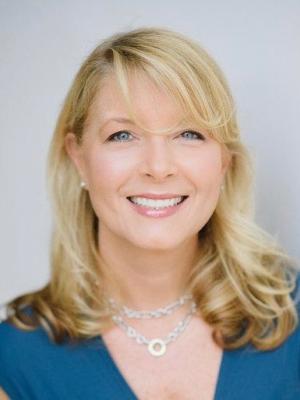 Dr. J. Kim Penberthy, PhD is a clinical psychologist, a professor in UVA’s Division of Perceptual Studies, and a psychiatry professor in the School of Medicine’s Department of Psychiatry and Neurobehavioral Sciences. Penberthy’s research interests include consciousness and psychology at the end of life and research regarding the use of contemplative and mindfulness practices to enhance people’s abilities and performance. She also specializes in working with patients with mental health issues and physical illnesses such as cancer, HIV, and diabetes.
When I first met him, he was quiet, grieving, and caught in a loop of painful uncertainty. His wife had died from cancer nearly a year earlier, and while he knew he had loved her deeply, a single tormenting thought persisted: “I’m not sure she really loved me.” This doubt haunted him. Without the chance to ask her or hear her response, he found himself stuck in unresolved longing. His grief was no longer adaptive—it had become prolonged and paralyzing.
We began working together in therapy, and I suggested a simple practice: meditation. My hope was modest—that cultivating stillness might soothe his ruminations and give him a small degree of mental spaciousness. He was hesitant but committed, and over time, he learned to meditate with growing ease.
Then, one day, everything changed. After a particularly deep session, he told me something extraordinary. In that meditative state, he said, he experienced an unmistakable presence: his wife. “She came to me,” he said, eyes filling with tears. “She was there. It was warm, loving—and I just knew. She did love me.”
This encounter, which he described as deeply real and healing, marked a turning point in his grief. The obsessive thoughts lost their grip. His sadness remained, but it was no longer isolating—it was tethered now to something he felt and understood, perhaps even something sacred.
This man’s story is one among many. In fact, experiences like his are remarkably common. Known as after-death communications (ADCs), these events involve a felt sense of contact—visual, auditory, emotional, or intuitive—with a deceased loved one. ADCs may occur spontaneously or within altered states of consciousness such as dreams or meditation. Surveys estimate that between 30–50% of people will have an ADC at some point in their lives (Guggenheim & Guggenheim, 1996; Haraldsson, 1988).
Despite their frequency, ADCs remain stigmatized in many clinical and scientific settings. Historically, such reports were dismissed as wishful thinking, hallucinations, or symptoms of mental illness. But emerging research—including ongoing studies at the University of Virginia’s Division of Perceptual Studies (DOPS)—suggests otherwise.
 The Science of ADCs
Our team at DOPS has documented that ADCs often bring comfort, decrease symptoms of prolonged grief, and shift spiritual and existential beliefs (Penberthy et al., 2023). In many cases, individuals report reduced fear of death and an increased sense of meaning, connection, and hope.
While these experiences are subjective and difficult to measure using traditional biomedical methods, they are not meaningless or random. Instead, they appear to serve adaptive psychological and emotional functions. In some cases, like the one I described, an ADC can resolve long-standing emotional pain and provide clarity that years of therapy alone might not achieve.
Moreover, ADCs are not confined to any one cultural or religious group. They are found in nearly every society and spiritual tradition. The universality of these experiences is striking—and invites open, empirical investigation (Barrett, 1926; Rees, 1971).
Yet most mental health professionals receive little or no training in how to understand or discuss such experiences. This can leave grieving patients feeling alienated or dismissed at the very moment they need compassionate curiosity.
At UVA, we believe it’s time to change that.
 Listening as Healing
As a clinical psychologist and researcher, I’ve found that honoring these stories—listening without judgment—is itself therapeutic. Whether or not we can “prove” the metaphysical truth of an ADC, we can appreciate its psychological significance. We can ask: What did it mean to the person? How did it shape their grief? And what might it reveal about the human need for connection, even across the apparent boundary of death?
This is the frontier of healing: the space where science meets the profound mysteries of human experience.
And here at UVA, we’re listening.
SIDEBAR: About the Division of Perceptual Studies (DOPS)
Founded in 1967 by Dr. Ian Stevenson, the Division of Perceptual Studies (DOPS) is part of the Department of Psychiatry and Neurobehavioral Sciences at the University of Virginia School of Medicine. It is one of the only academic research groups in the world dedicated to the rigorous study of phenomena that challenge prevailing materialist assumptions about consciousness.
DOPS researchers investigate experiences such as:
- After-death communications (ADCs)
- Near-death experiences (NDEs)
- Children who report memories of past lives
- Apparitions and deathbed visions
- Altered states of consciousness
Through peer-reviewed publications, clinical collaborations, and public education, DOPS aims to deepen our understanding of human consciousness and foster open-minded exploration of existential questions.
To learn more, visit: https://med.virginia.edu/perceptual-studies/
References
- Barrett, W. F. (1926). Death-bed visions. London: Methuen.
- Guggenheim, B., & Guggenheim, J. (1996). Hello from Heaven!. Bantam Books.
- Haraldsson, E. (1988). Survey of claimed encounters with the dead. Omega: Journal of Death and Dying, 18(2), 103–113.
- Penberthy, J. K., St Germain-Sehr, N. R., Grams, G., Burns, M., Lorimer, D., Cooper, C. E., ... & Elsaesser, E. (2023). Description and Impact of Encounters With Deceased Partners or Spouses. OMEGA-Journal of Death and Dying. https://doi.org/10.1177/00302228231207900
- Rees, W. D. (1971). The hallucinations of widowhood. British Medical Journal, 4(5778), 37–41.
- Choosing the Book: Protecting a Reading Life in an Age of Endless Scrolling
- Maybe We Shouldn’t Celebrate Positive Thinking Day
- What We Lose When a Species Disappears
- UVA Clubs: Cavalier Countdown Tailgate: UVA vs. West Virginia
- Grounds for Conversation with President Scott Beardsley in San Francisco
- UVA Clubs: UVA vs Vanderbilt Men's Basketball TheLinkU Invitational Pre-game Social